How to estimate your own bookkeeping workload before you ask for a price
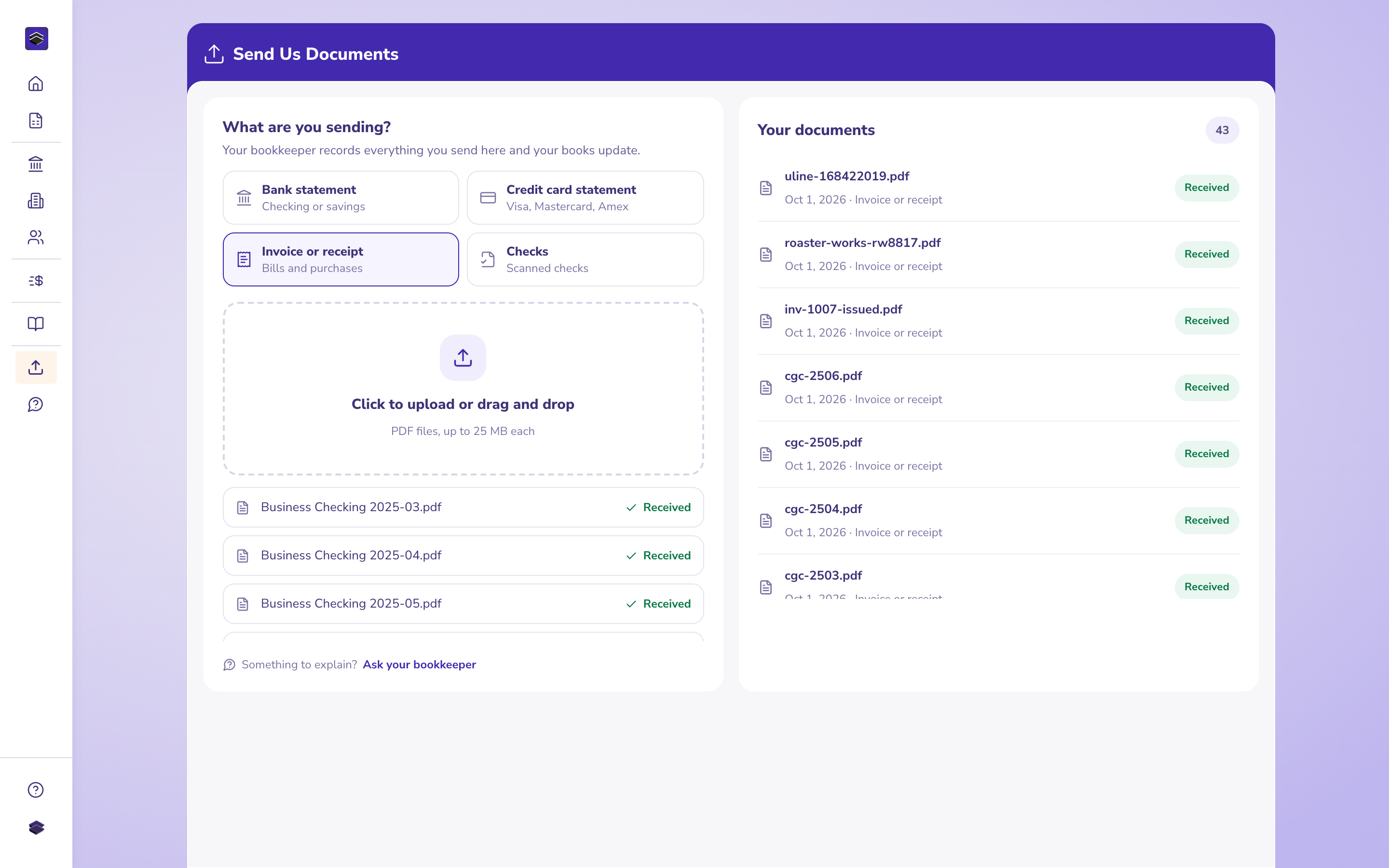
You can estimate your bookkeeping workload in about half an hour with last month's statements. Count the accounts and transaction lines, note payroll and inventory, and name the last month you trust. At roughly 2.7 minutes a line, that gives a monthly hour figure to check any quote against, hourly or fixed.
Here is the method, step by step. The minutes-per-line figure is an assumption; adjust it for your own books.
How do you measure your monthly bookkeeping workload?
Step 1: List every account
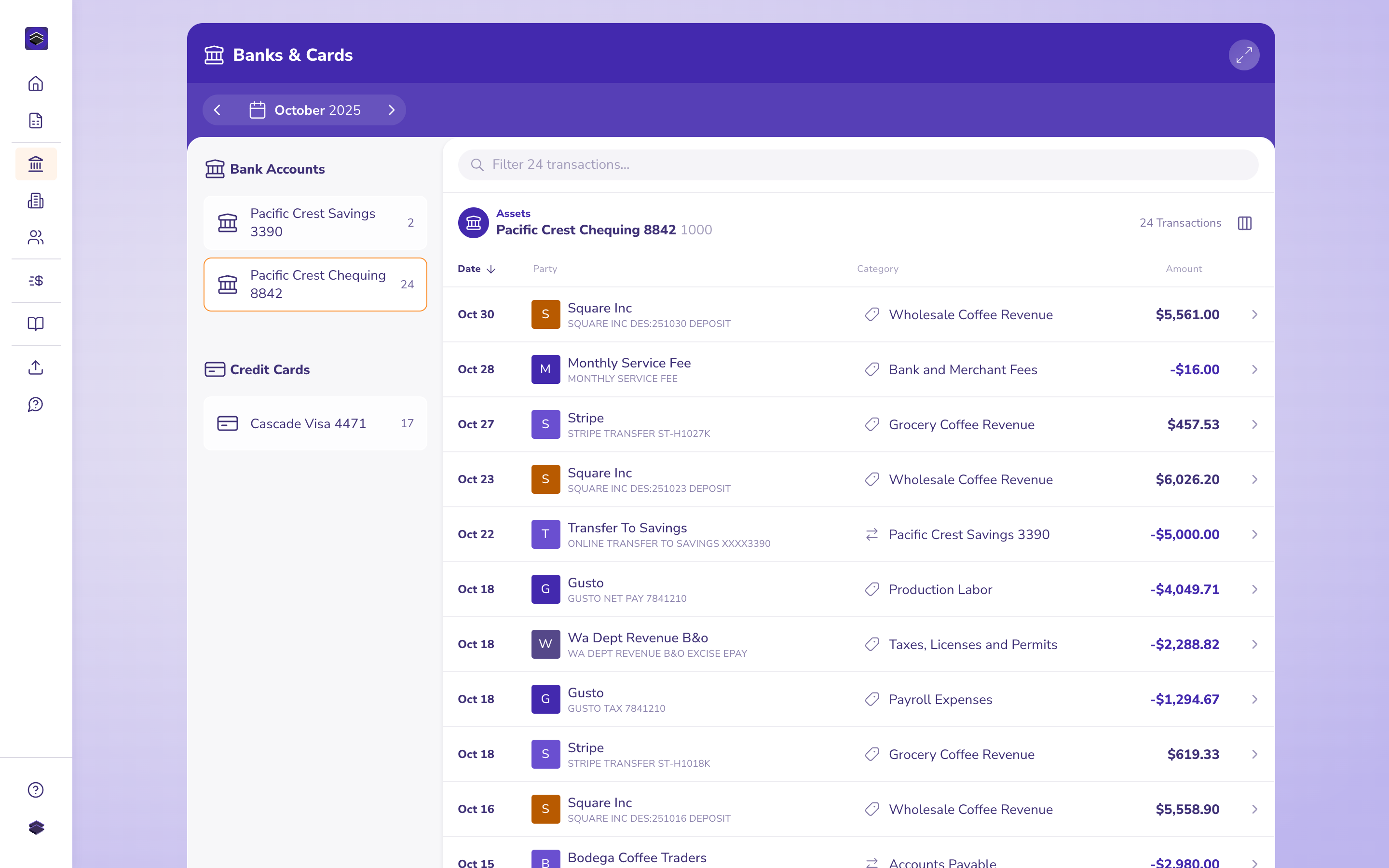
Write down every bank account, credit card, loan and payment processor that touches the business. Include the quiet ones. Each account needs reconciling to its statement every month, whether it had two lines or two hundred.
Step 2: Count last month's lines
Open each statement for last month, count the transactions and add them up. If last month was unusual, do the month before as well and take the average.
Step 3: Turn lines into hours
A rough figure for categorizing and reconciling by hand is two to three minutes a line for a business with recurring vendors. The example on the ZeraBooks site uses 8 hours for 180 lines, about 2.7 minutes a line.
| Lines a month | Hours at 2.7 min a line | At an assumed $45 an hour |
|---|---|---|
| 180 | 8.0 | $360 |
| 450 | 20.0 | $900 |
| 1,500 | 66.7 | $3,000 |
If your books are messier, with many one-off vendors or cash, use a higher minutes-per-line figure.
Which bookkeeping work doesn't scale with transactions?
Step 4: Add the fixed jobs
- Payroll: recording each pay run from the provider's reports, with wages, taxes and liabilities. Add an hour or two a month for a small team.
- Inventory: a month-end count and the cost of goods sold adjustment.
- Bills and invoices: if you track who owes you and whom you owe, each one is entered and later matched to its payment.
- Month-end reports: reviewing and sending them.
Step 5: Name the last month you trust
Every month after it is extra work, done once. Write down how many months that is and which accounts they cover. A good quote prices this separately from the monthly fee.
How do you compare bookkeeping quotes?
Step 6: Price the hours
Multiply your monthly hours by a local freelance rate to get an hourly benchmark, then compare it with any fixed monthly quote. If a fixed quote is far below your estimate, ask what is being left out.
When a quote looks too cheap for your line count, reconciliation is usually the first thing that was left out.
Step 7: Write it on one page
Accounts, lines, fixed jobs, months behind, reports wanted. Send the same page to everyone you ask for a quote, so the answers can be compared.
Key takeaways
- Statement lines per month are the best single guide to bookkeeping work.
- At about 2.7 minutes a line, 180 lines is about 8 hours a month.
- Payroll, inventory and invoice tracking add fixed time on top.
- Catch-up months are priced once, separately from the monthly fee.
FAQ
How much does a full-time bookkeeper cost?
The U.S. median wage was $50,670 in May 2025 (BLS). Employer Social Security and Medicare bring it to about $54,546 a year, before benefits and software.
Is reconciliation included in most bookkeeping quotes?
It should be. Ask directly whether every bank and card account is reconciled to its statement each month, because it is the step most often trimmed from low quotes.
What should I send a bookkeeper to get an accurate quote?
The one-page summary from step 7: accounts, monthly lines, payroll and inventory, months behind and the reports you want back.
The U.S. wage data, a table of what pushes the price up and one small business priced four ways are at https://www.zerabooks.com/how-much-does-a-bookkeeper-cost.
Disclosure: I'm the founder of ZeraBooks. If you would rather hand the work over, ZeraBooks quotes from exactly this page after a free call, from $150 a month in U.S. dollars, with an upload portal and a read-only login.


Comments
Post a Comment